
David Pierce, host of The Vergecast:
So where did Markdown come from? It came from John Gruber. John
joins the show, along with Anil Dash, to tell the story of where
Markdown came from and how it took over the world.
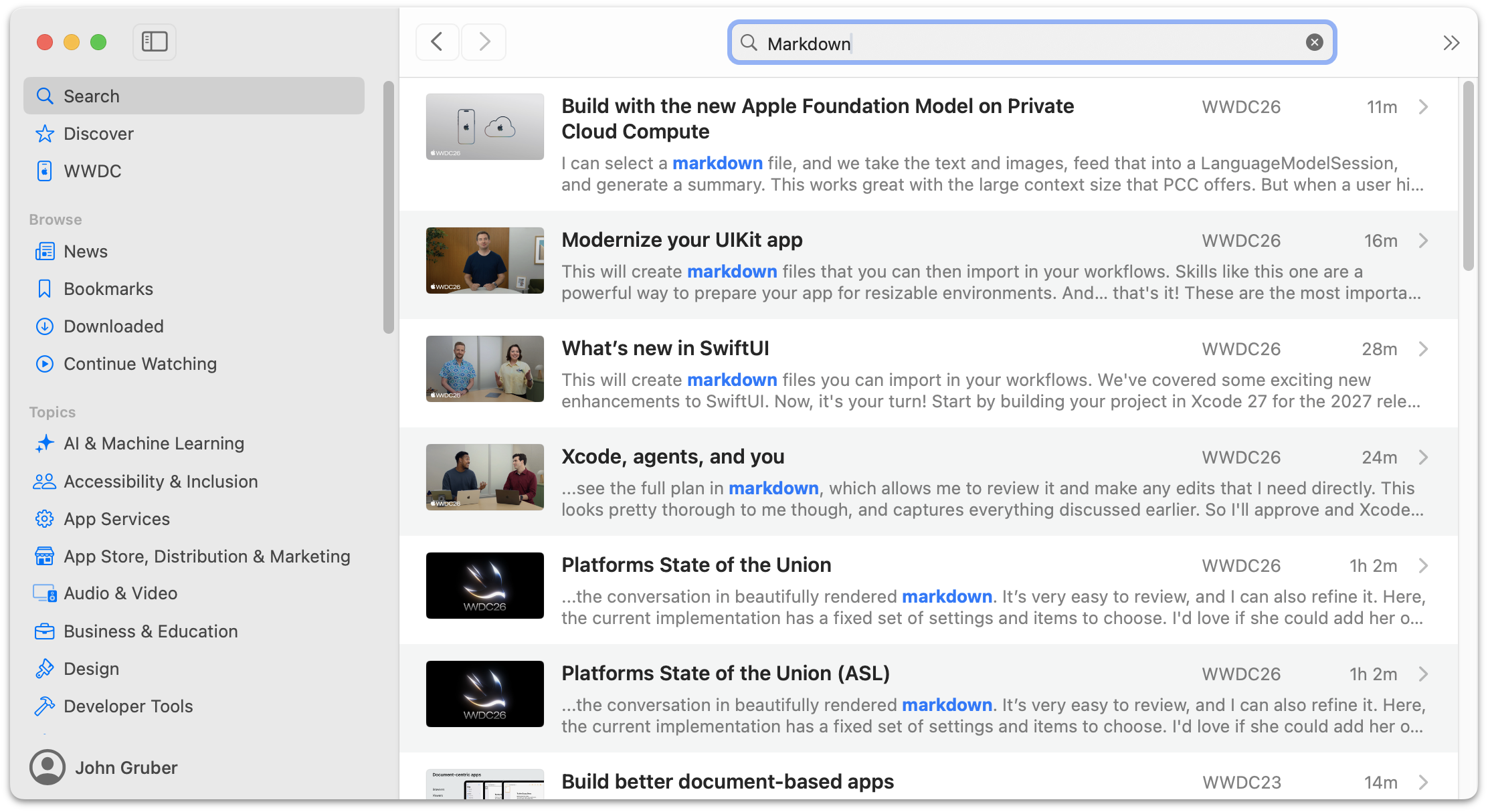
Markdown has been growing steadily for years, but it’s seen a step change in popularity now that it’s been embraced as the lingua franca of LLM agentic systems. I had an interesting all-too-brief chat last week in Cupertino with some people from Apple’s developer tools team about how it feels to see Markdown spread everywhere — including WWDC. In a word, gratifying.
But the biggest reason for Markdown’s continuing success isn’t Markdown itself. It’s the triumph of plain text files, both for system configuration and for the interchange of human-readable (and thus, LLM-readable) prose. Markdown isn’t really a “syntax”. It’s a set of conventions for formatting plain text. If everyone agrees to the same basic conventions, plain text can be significantly more expressive than a string of unformatted characters.
That’s it. So what I find gratifying isn’t that my “language” continues to thrive, because it’s not a language. It’s that the way I like to format plain text when I’m writing, and the way I like to see plain text formatted when I’m reading, has so thoroughly won the world’s mindshare battle. “Ha-ha”, I say, to people who want *this* to mean bold, not italic. (And to Slack and WhatsApp, I say “Fuck you.”)