
Thibault “Tibo” Sottiaux, the OpenAI engineering lead who’s taking the most public credit for this and thus probably deserves the most blame, on Twitter/X:
Evening! We’ve gotten lots of great feedback on the new ChatGPT
desktop app (which we didn’t get totally quite right on the first
try), and as a result, we’ve made some changes.1/ ChatGPT conversation history and projects are now visible in
the sidebar. Also, your Chat and Work history now sync across
web, mobile, and desktop. Local tasks still stay on your
computer.
How in the world did they ship this without sync?
2/ You can now easily switch between Chat and Work modes inside
ChatGPT on desktop, which is now also consistent with how it
shows on web and mobile.
Bringing back “chat” to ChatGPT is literally the least they needed to do. Hiding chat in an obscure corner of the interface from an app named “ChatGPT” would be like removing text editing from TextEdit.
The updates OpenAI shipped yesterday address some of the abject incoherence of the initial rollout of the “new” ChatGPT, but it’s still dogshit. The new app remains a 1.5 GB Electron monstrosity (and if it’s not technically Electron that’s because they’ve created another bloated layer of abstraction around Electron — Sottiaux oversees the only engineering group in the world that looked at Electron and thought it was too slim and close to the metal).
Here’s the software update dialog I saw today in the old version of ChatGPT, which is now named ChatGPT Classic:
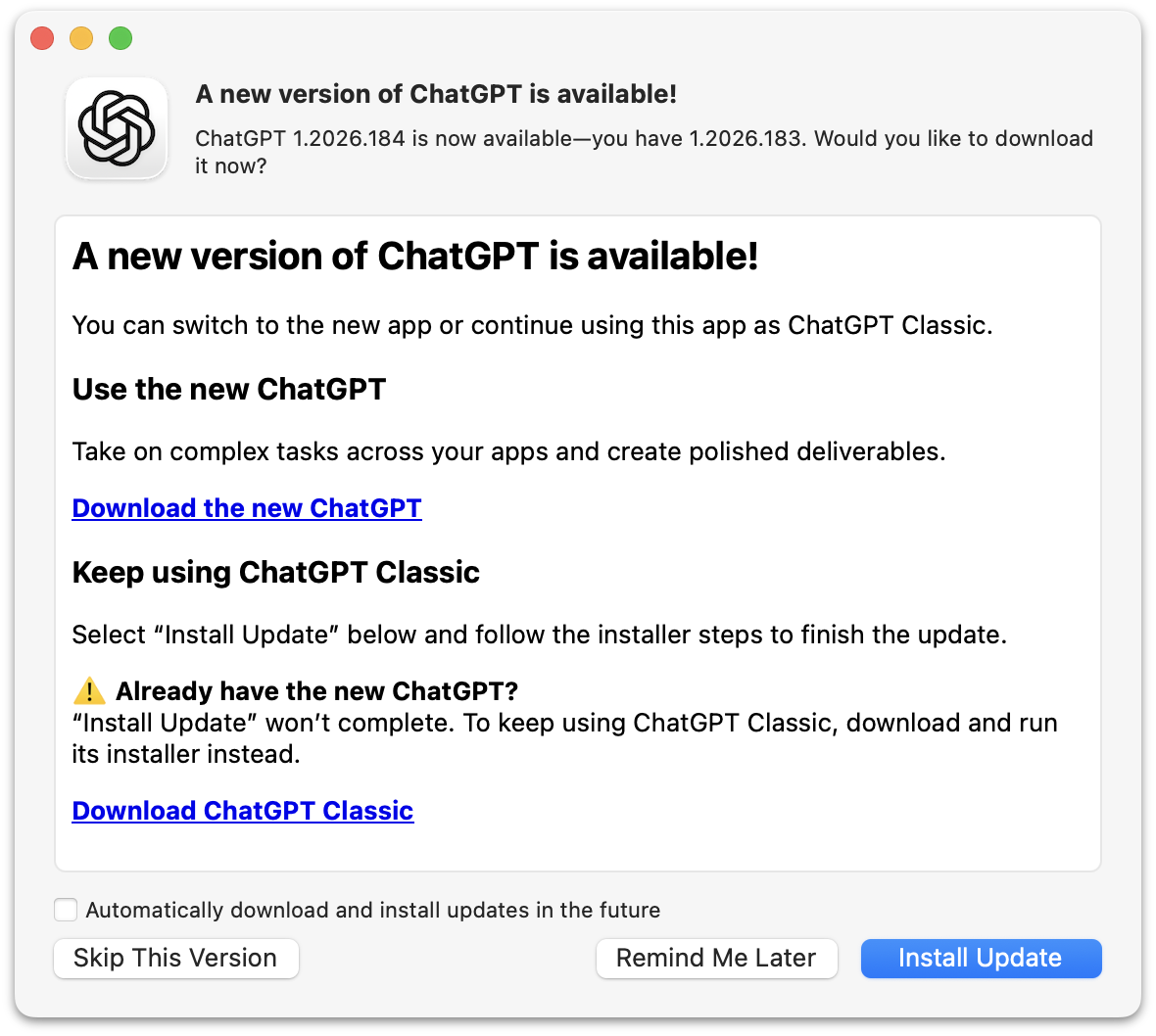
What they’re trying to say here is that if you’ve ever installed the new ChatGPT the “Install Update” button in this dialog with do nothing. It will take some time to do nothing, but ultimately do nothing. Except quit ChatGPT.
If you’ve never installed the new ChatGPT, this dialog box will update the old ChatGPT to the latest version, which is now renamed “ChatGPT Classic”. If have tried the new ChatGPT, you need to install ChatGPT Classic manually, even though you’re seeing this update dialog box in a slightly older version of the app you want to keep using.
This makes the “New Coke”/”Coke Classic” fiasco from the 1980s look like a well-thought-out change.
