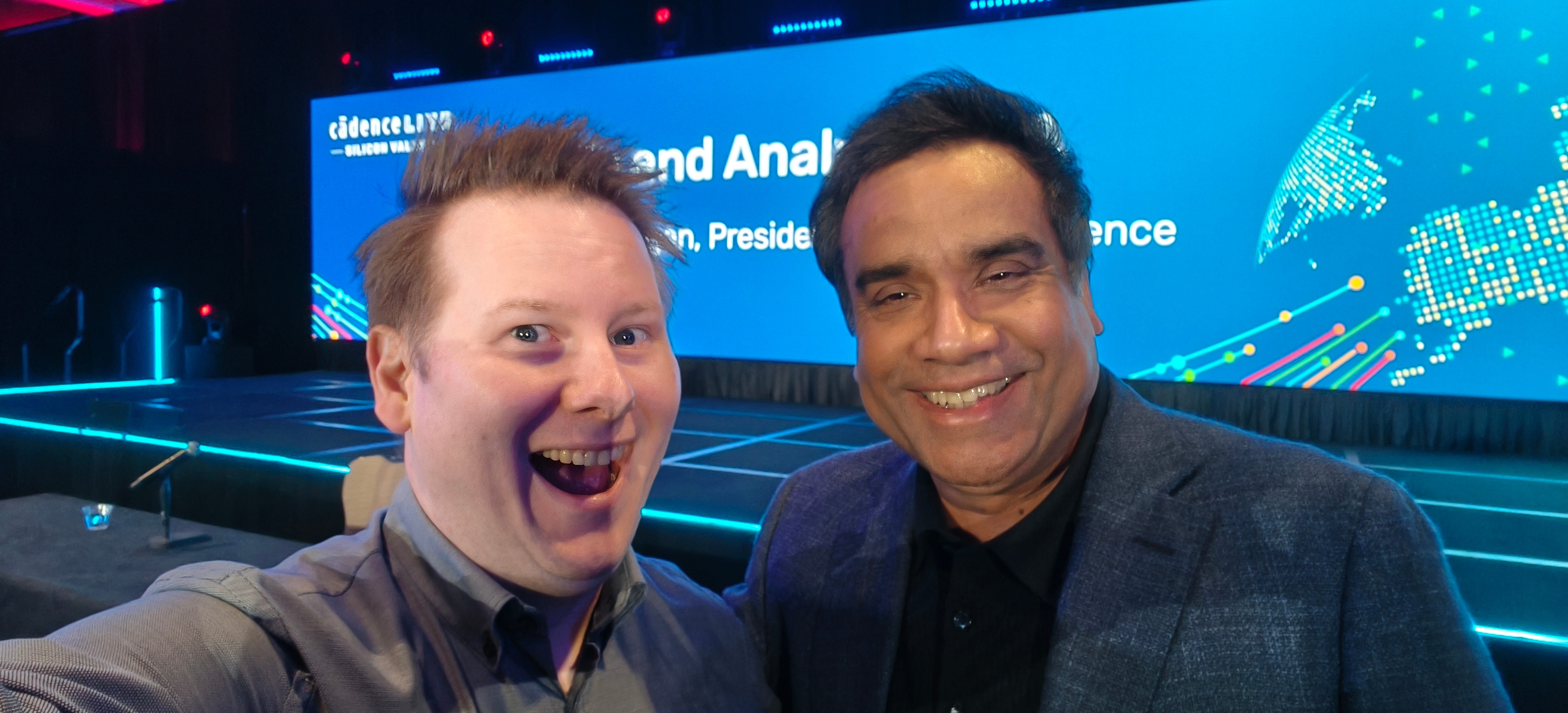
Cadence has spent the last several years trying to broaden what EDA means, pushing further up the stack into system design, digital twins, robotics, and now agentic AI. But while much of the wider AI market is still debating copilots, wrappers, and workflow automation, the more interesting question for engineering software is whether these models can actually become part of the design environment itself. That means not just chatting with tools, but understanding flows, calling into engines at a granular level, and turning decades of accumulated software infrastructure into something that behaves more like a team than a point product.
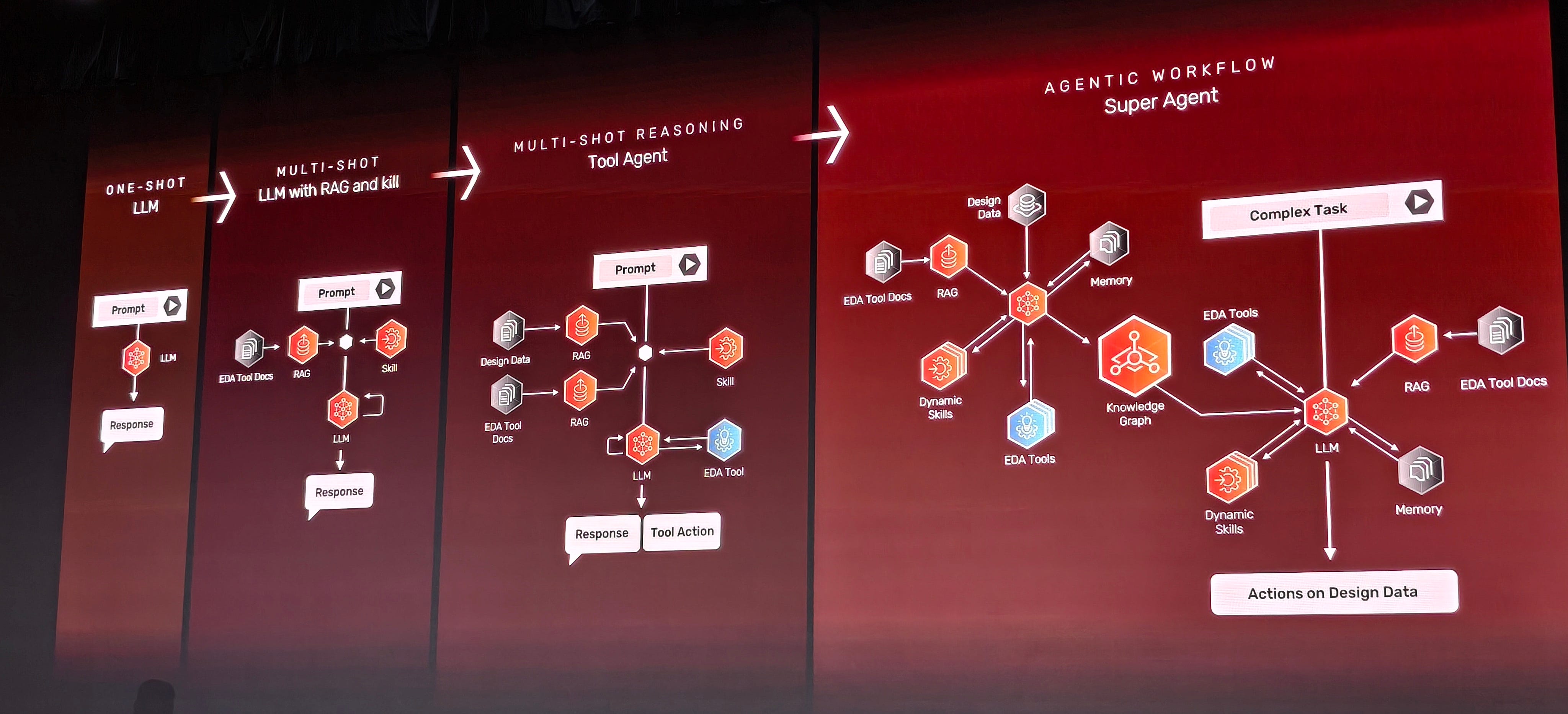
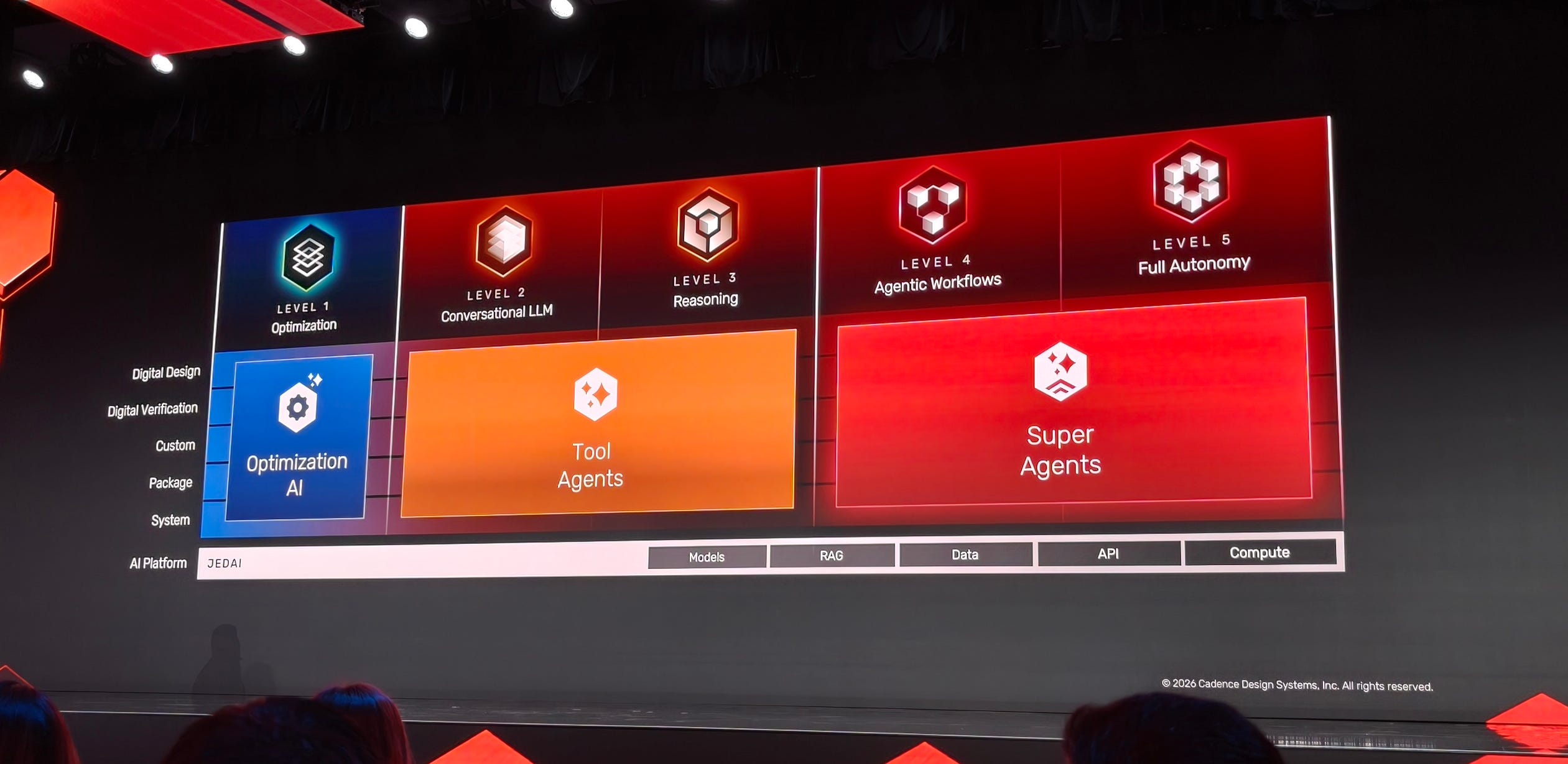
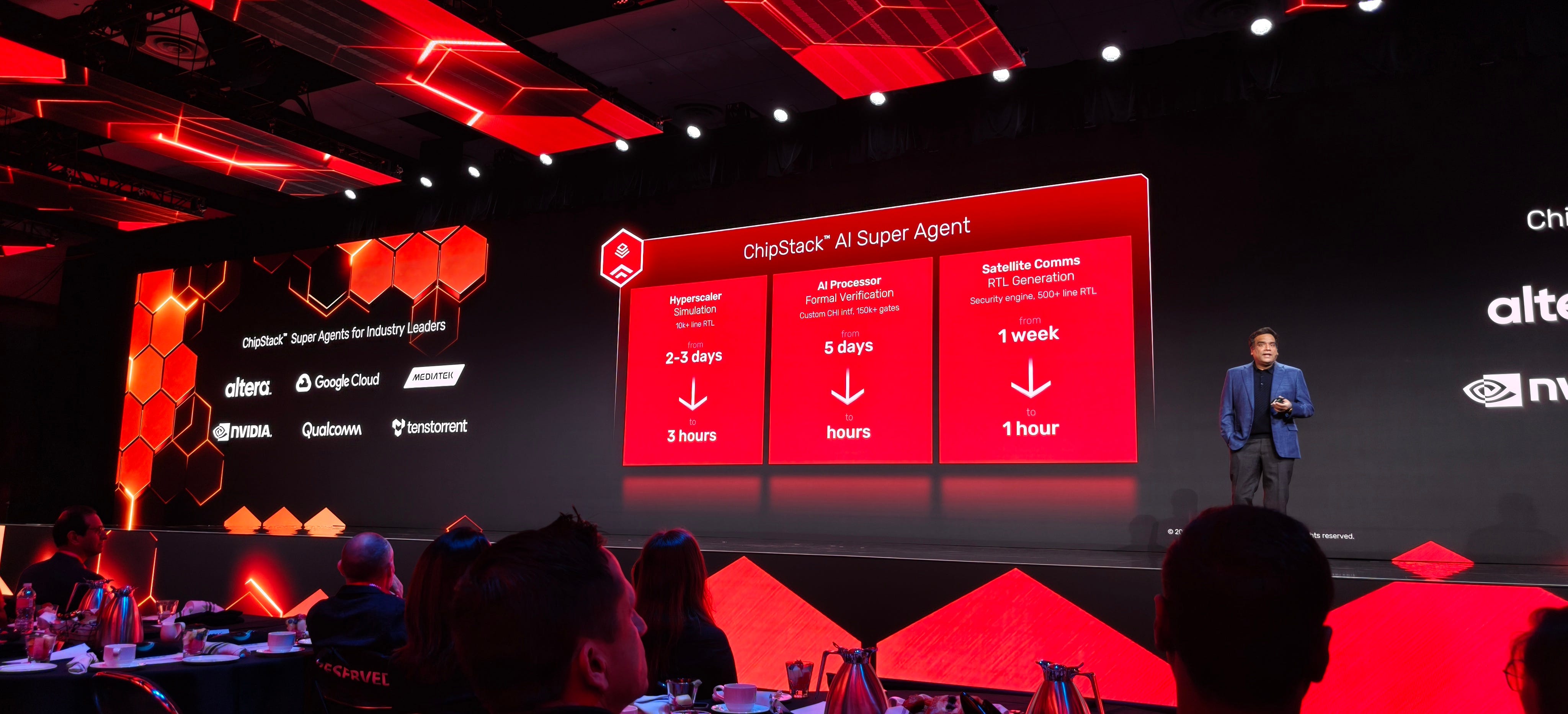
This year at CadenceLIVE, its annual event, the company is emphasising the fact. A couple of months ago the company announced ChipStack, its new orchestration layer for its tooling. At the top, a head agent has access to five super agents, each in control of different parts of the chip design workflow. Each of these super agents has the ability to access other micromodels and learn skills over time to help architects and chip designers improve and iterate on their design, in both the analog and digital domains. It’s this approach to chip design that Cadence believes will supercharge the current run of chip design, leveraging better PPA and time to market.
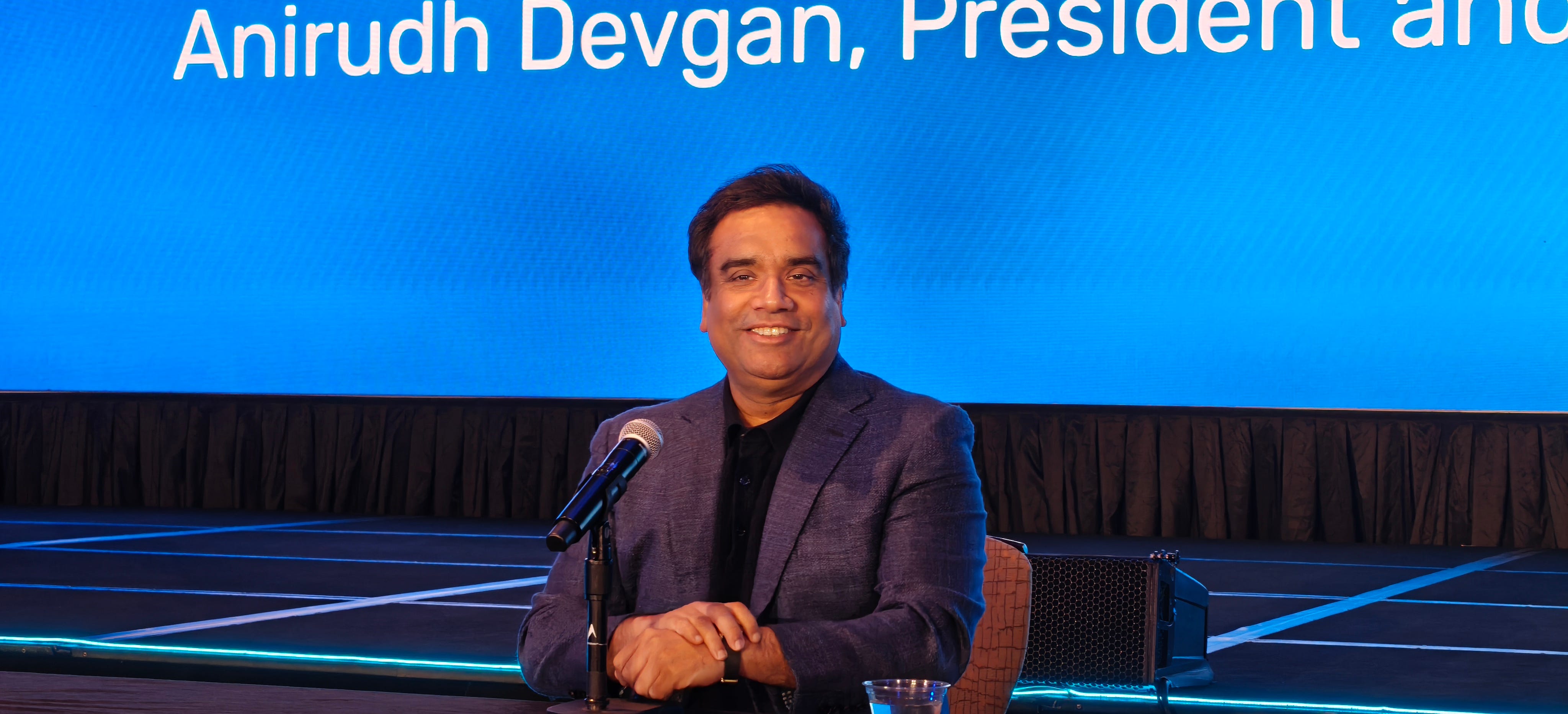
That is the backdrop for this discussion with Cadence CEO Anirudh Devgan, which focused on how the company sees agentic design evolving, how it expects to price that transition, why it believes orchestration should sit with the tool vendor rather than the customer or a general purpose model provider, and where all of this may lead next across physical AI, scientific discovery, robotics, and the broader system design stack.
The following was edited for clarity.
Anshel Sag, Moorhead Insights: How does the pricing of what you are doing change with an agentic approach compared to EDA tools using per core or per seat licensing? How does that evolve?
Anirudh Devgan: Three things are going to happen. The agents are going to be used as tools, [sold as a license] so license demand should go up. The license numbers are already increasing somewhat, so that still supports the traditional business model.
Then there are two new layers. At the top layer, it becomes more like LLM economics, with consumption based pricing. We have already tried that with new customers, and they are willing to do it. The agentic layer is also doing work that EDA never really did before, like writing RTL or generating verification code. This is augmenting the human capability.
So there are really two new models there. One is that we charge for the agent, based roughly on the amount of work one human might do. The other is the consumption model. If an agent can do ten blocks instead of one, then consumption rises accordingly.
So price per agent is new, consumption is new, and at the same time there is more demand for the traditional baseline licenses. When I talk to big CEOs and major customers, they are fine with that as long as there is clear value. They would rather pay for that than hire more people. That is important.
Leonard Lee, Next Curve: In the horizons you laid out, science AI appears later, but in some ways that is already happening. Traditionally we have seen scientific discovery tied to supercomputing, and now quantum is also often discussed in that context. Why place that later than the present?
Anirudh Devgan: All of these things are happening already. Some people do talk about them that way. For me, it is more a question of critical mass. It is like robotics.
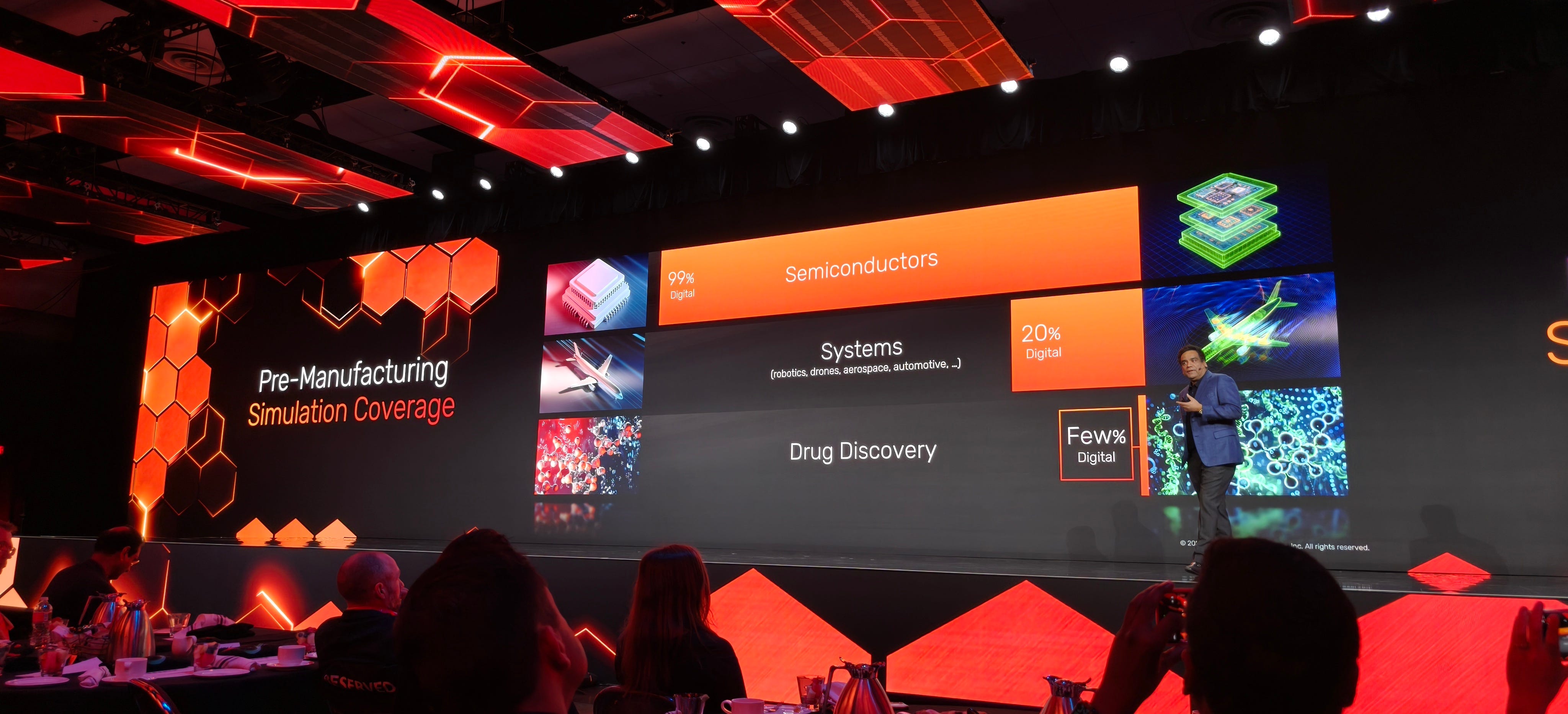
These things are not all happening at the same speed, and drug discovery is not moving at the same pace as robotics. We are already working with all the big pharma companies, probably the top fifteen or twenty. So it is happening. But it still needs to reach escape velocity. LLMs have already reached escape velocity. Robotics is getting there. Science will take longer. Once it reaches critical mass, it could be even bigger than robotics or physical AI. It could become a multi trillion dollar opportunity.
For me, 2026 is really the start of physical AI. The biggest invention of the last few years is self driving. Drug discovery and medicine could end up being bigger [than self driving], but that depends on how quickly they reach escape velocity.
It is not just AI, but AI plus custom hardware. The biggest breakthrough is self driving, whether you look at Waymo or Tesla. In five years, the number of people driving cars could be much lower than today. And if you can self drive cars, then eventually you can self drive ships, drones, and defence systems. Drones will happen. Industrial robots will probably come first.
So physical AI has already started on that escape velocity curve. It may not be visible to everyone yet, but it is getting there. In pharma, progress may be more drug specific and more dependent on the problem. We can already do candidate selection, but a true breakthrough in drugs or materials science will take more time. If you say everything is happening at once, no one believes it. It is really a matter of timing.
Steven Nellis, Reuters: Why is orchestration such a computationally complex problem, and what is your differentiation versus companies building their own agents?
Stephen: Jensen may want to use yours, but general purpose agents from others will also exist. If the orchestration layer is really coordinating a set of point agents that know how to use tools, why is that a problem that naturally sits in your wheelhouse? Today that orchestration is often just people coordinating other people and meetings. I am not sure what your advantage is compared to others coming from general computational software.
Anirudh Devgan: There are really three types of entities that could do the orchestration at the top. It could be us. It could be the customer, and they are doing some of that already. Or it could be a regular LLM provider.
The reason we think we will be best is straightforward. First, we can call the tools in a very granular way through our APIs. Customers like NVIDIA and others will write their own agents, and LLM companies will also interact with tools, but usually at a much more basic level. We can look inside the engines. We know the software details at a much deeper level, and that is a fundamental advantage.
Second, we have the right mental model. We understand the chip stack and the domain specific details. Customers will absolutely write their own agents. They already are. Agentic flow is really a better orchestration of the design flow. The implementation tools already have specific interfaces, and every company has its own way of calling our tools. They will still do that, but now they can do it with agents.
So yes, there will be lots of agents. Customers will have their own. But the big agents, the broad orchestration agents, will be done with us. When we show our customers our stack, they generally do not want to recreate the whole big function themselves. They may want domain specific functions, but not the full thing. That is what I see happening. We want to make sure customers can use our agents or call their own agents if they need to. But the main work will be done in our super agent. We have shown this to many customers now, and it is a lot of work to build.
As for the LLM companies, they need tools and domain knowledge. They will keep improving the models, and they may have some domain specific areas like cybersecurity, but they do not have enough data in this domain. In all my interactions, whether with Charlie (Broadcom) or with Jensen (NVIDIA), they already have enough to work on. They have very big problems in physical design, analog, digital, and so on. There is no real need for them to deal with this entire layer themselves. For some specific chips, yes, they might have their own agents, but we will have ours too.
Steven Nellis, Reuters: What if a customer wants direct access to those APIs?
Anirudh Devgan: You need a full R&D team to do that. Even with the current interfaces, we have access at a deeper level. You need to know the history and the algorithms. The big companies generally do not want to work at that layer.
We have shown this to many companies. The real question is why EDA companies can do this now, after more than thirty years of workflows and tools. We always wanted to automate more, but before there was no algorithmic way to combine knowledge and workflow automation. Now there is.
I am showing real demos. We want agents and models with skills. The hardware matters too. We have the data, the knowledge, and the hooks that are specific to this domain.
Nina Turner, IDC: When you talk about orchestration inside the flow, are you talking about functions, overlays, handoffs? And if that happens, is it only within Cadence tools? Some designs use tools from multiple companies for different functions. How would that work?
Anirudh Devgan: Our overall flow, what we call AgentStack, is much bigger than just RTL. It has a large backend component, and our IP team is very excited about it too. IP is not as profitable as EDA, but with this kind of tooling we can operate like a team that is twice the size. It becomes an environment for our mixed signal IP as well. That is why I emphasise the stack.
Customers can write their own agents, or call it from other models if they want to, and they can write their own skills too. When it comes to mixing tools, we will have to see. They could call another agent if they wanted. But our goal is to make sure we have the best tools and the best agents.
As workflows become tighter, there will be more verticalization. In the old days, companies might have had a zig zag flow between different vendors. Now we are moving toward more vertical flows. Part of that is because advanced nodes are much more complicated, but part of it is also because AI makes tighter integration more valuable.
What is likely to happen is still some splitting of designs between different flows at a high level. But our goal is to have the best PPA, not just the best agentic layer, but also the best base tools. We want to be the premium option. The more complexity there is, the more there is a need for verticalization.
Anshel Sag: Do you have plans or concepts for a major agent to orchestrate over everything?
Anirudh Devgan: That is our AgentStack. It is the head agent for the super agents. It is a hierarchy of agents. We have five super agents under AgentStack, and then twenty to thirty agents under those, because each tool will ultimately have an agentic interface. But AgentStack is the head agent.
Chris Rommel, VDC Strategy: For twenty years we have been talking about EDA leading into system of systems design. Beyond the investments you are making, what are the things that can help Cadence become that head agent versus other tools, not just the other EDA players but everyone else trying to steer workflow across domains?
Anirudh Devgan: In the end, it comes down to who has the best solution. We are very confident in the super agents. We need a head agent to bring them all together, and we need that to be consistent. But ultimately the real differentiator is the quality and scale of the super agents. They are as complex as the base EDA tools themselves.
Another thing that matters is our customer base. 70 to 80 of our biggest customers represent most of our revenue. This is very different from a SaaS business. And something that is often not appreciated is that every week we have multiple R&D meetings with those companies.
In engineering software, they tell us every week what they want, and they want these super agents. For them, it is a waste of time to write those from scratch. If we do a good job, with the right team and the right technology, there is no reason for them not to use it. Our customers want us to build it.
For others, it becomes a mathematical problem of combining the layers. For example, all the LLM companies talk to us anyway. The opportunity is to substitute manual work with automation. We showed our analog stack to customers and demonstrated how we can automate what they are doing. In the end, the best product wins.
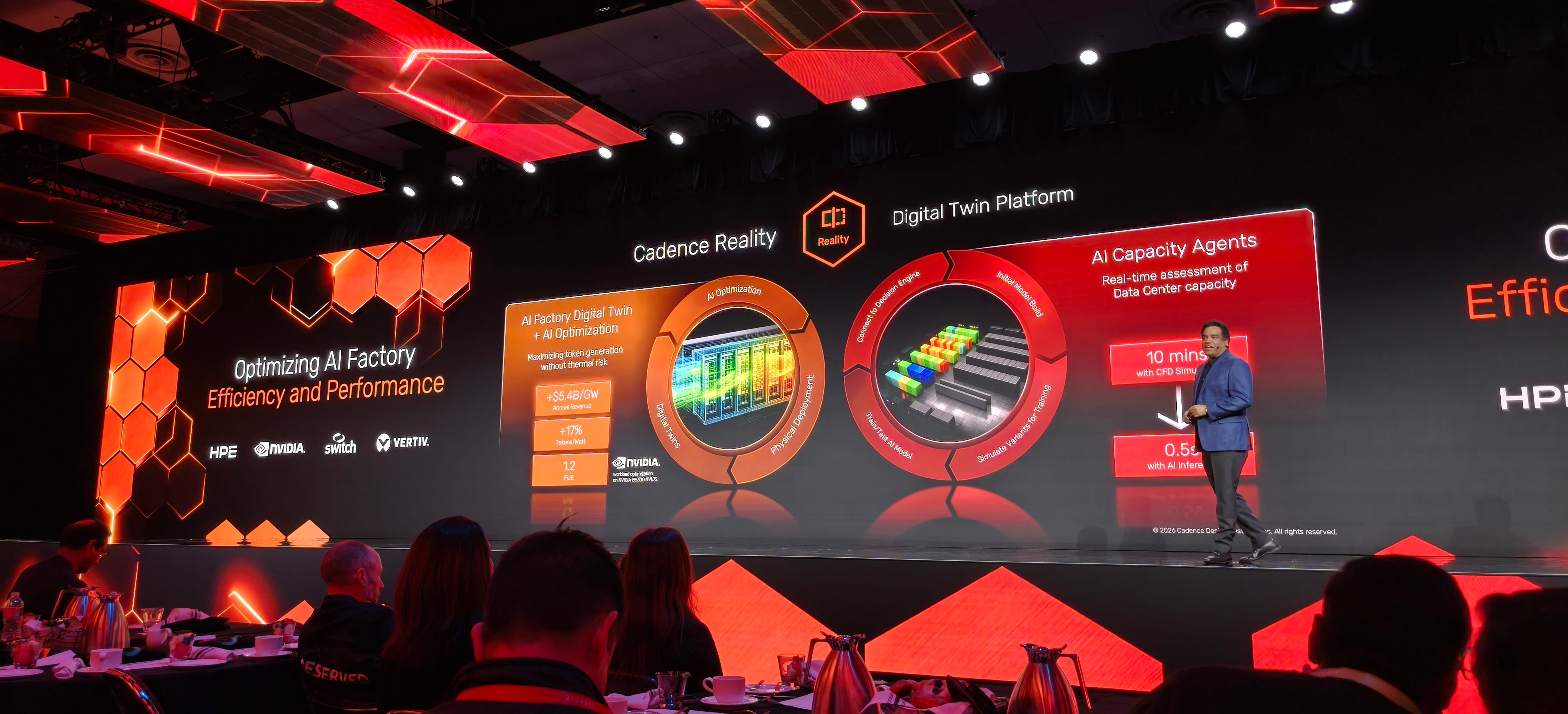
Fudo Abazovic, ACAnalysis: Can you talk about digital twin, and markets beyond AI datacenters?
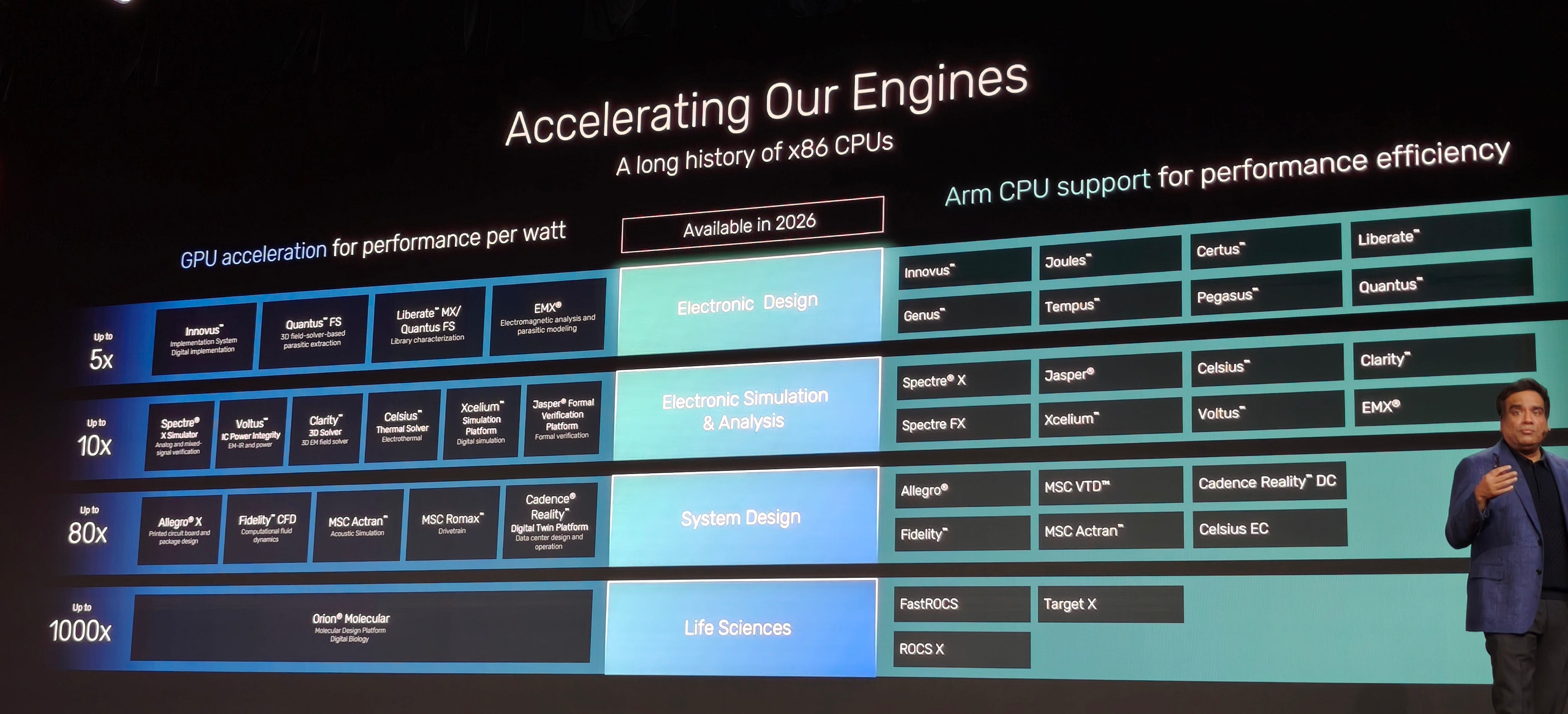
Anirudh Devgan: We are seeing good results there already with the hyperscalers. The other major area is robotics. One reason we made acquisitions is because if robotics becomes a $250B billion dollar market, then the sim to real gap has to get much smaller.
Atoms had the most accurate approach. If you look at environments like Isaac from NVIDIA or MuJoCo from Google, they keep improving the physics, but it is still game physics. It is good for movement, but not always for detailed interactions. The most accurate multi body dynamics came from Atoms (a company Cadence acquired). The issue used to be speed, but now we can get it close to real-time.
When I talk to robotics companies, one of their biggest challenges is what happens in that last millimetre, when something grips or deforms an object. That is where digital twins can play a very important role. That is the first focus.
Another area is CFD for drones. We did a project with Boeing that showed only about twenty percent of the desired simulation was being done, simply because the simulations take too long. Now, with our software and GPUs, we can accelerate part of that. So the sim to real gap in physical AI, along with CFD and aerospace, is a very important opportunity.
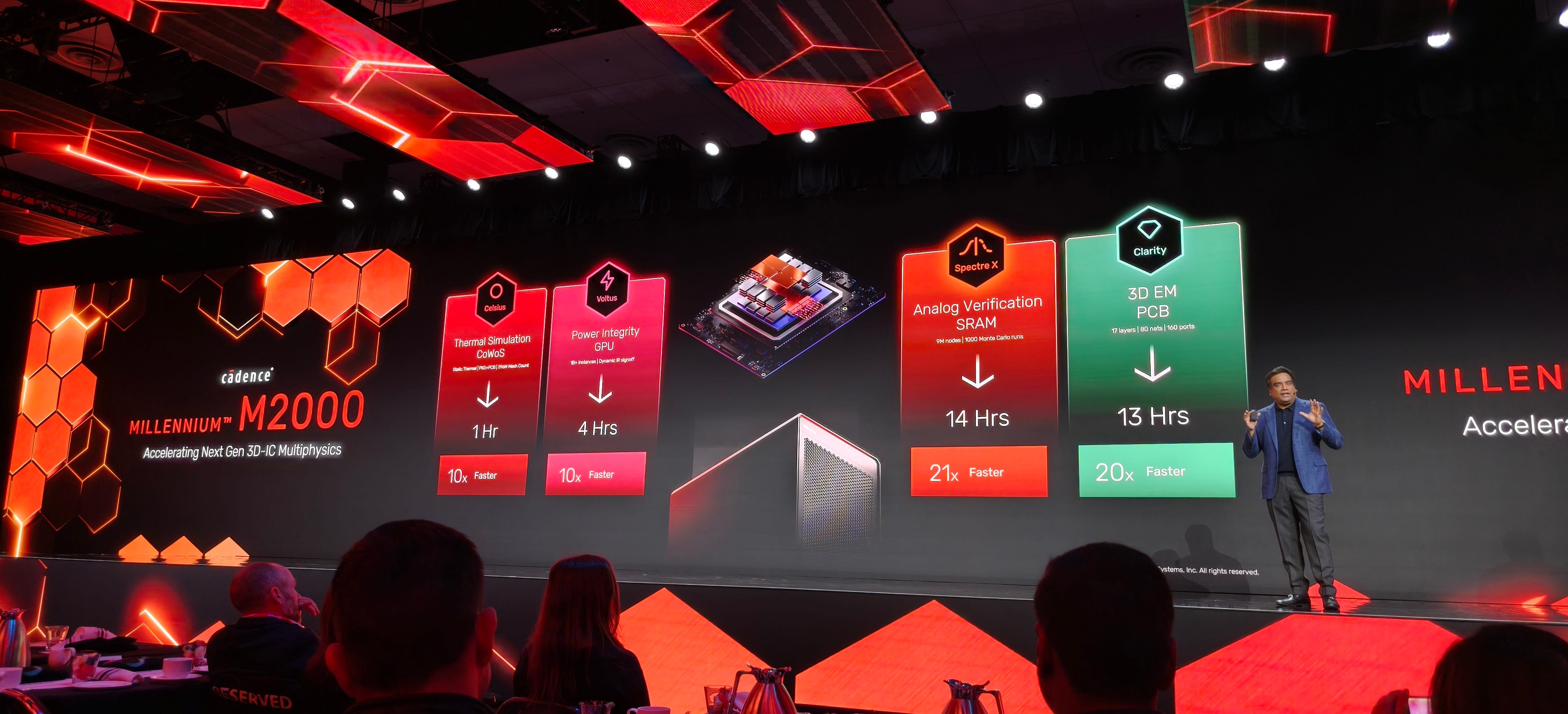
Nitin Dahad, EE Times: All the EDA companies have made investments to broaden access beyond traditional chip design firms. How accessible is this beyond the seventy to eighty companies you already work with, especially with respect to agents and the broader ecosystem? What about emerging companies that want to do chip design but do not yet know how, or do not have the resources?
Anirudh Devgan: You can blame me for the move into system space back in 2018. But this is 2026, and a lot has changed. We wanted to get into systems and diversify, and there is synergy there. I still like SDA (System Design Automation), but the value of EDA is much higher. We need to focus on the core business, which is the agentic flow.
SDA is good, but it is only part of the picture. 3DIC is interesting. Robotics is interesting. We now have more than a billion dollars of SDA business and it is growing. But the opportunity in EDA is re emerging in a major way.
If we can automate more of EDA with agentic workflows, then the larger system companies can do more silicon, extending beyond the datacenter into areas like robotics. So in agentic, the opportunity is huge within the core business. More system companies will do silicon, and there will be more automation from our side.
We still invest proportionally in those adjacent areas so we do not miss the opportunity, but EDA remains our core business. About eighty percent of the action is still happening in chip design. Customers can also do much more. We may only be one hundred times better than ten years ago, but there is still room to do ten times more than that. For example, automotive companies want to design more chips.
Leonard Lee: Agentic is a big topic this year. Where are your customers on the adoption curve? Is it early?
Anirudh Devgan: It is still early. A lot of them are writing small agents today. It depends on the company. Really, only in the last six months has the ramp increased significantly for us and for them.
That is why we acquired ChipStack. We launched in February, and now we are having much deeper conversations with customers. But it is moving very fast. The value is being realised because of the automation.
So yes, it is still early, but there is enormous interest. Rather than build everything themselves, they are asking us to do it, and we are ahead. It is early days, but they want these capabilities inside the environment.
For example, with VeraStack, you can call it from Claude, but because we have integrated it into Virtuoso with the key APIs, customers prefer to do it with us.
If you want, I can now do the next pass properly in your usual transcript house style, meaning tighter intro, lighter cleanup of the answers, and with the speaker tags formatted exactly the way you normally run them.